Another winter has passed and although it may be shy in its arrival, spring is upon us. The new season has brought with it not only green buds on the trees and blooming forsythia, but also new developments in my life. This past winter I stumbled upon an opportunity I could not pass up: an orchard in need of a caretaker.
One of a Kind Orchard was owned and cared for by Ray Reynolds and his wife Barbara for many years until Ray passed away nearly a year ago. For several years now the more than 500 trees comprising almost as many varieties of heirloom and traditional apples have gone untended. Not wanting to see such a treasure lost, Barbara has graciously allowed me to tend the orchard and take from it what fruit the harvest provides as my compensation.
 |
| Winter Pruning |
|
Taking on such an endeavor feels like going from 0 to 60 in the matter of a few months. The knowledge I had of organic apple growing has already increased ten fold and I have come to appreciate the value of learning through necessity. Having taken on this project in mid-February, I spent the slow cold days of winter with my head in books on pruning and organic apple production, taking some of the "warmer" days to venture out to the orchard to make my first pruning cuts and walk in the knee deep snow, up and down the rows slowly getting to know the trees. March brought more pruning. As I become more accustomed to the saw and loppers and more confident in my cuts I moved through the trees more quickly, especially on those days when a friend or two would come out and lend a hand.

April brought a cool wet spring that put the trees almost two weeks behind last year (an exceptionally warm spring). April also brought a scramble to purchase the sprays and equipment I would need to make my first foray into organic apple production. A twenty-six gallon sprayer, a 19.5 horsepower used lawn tractor and lots of kaolin clay were among the purchases. Now in these final days of April, I have made my first application of sulfur and piled up most of the branches left strewn around the orchard from winter pruning. After an exceptional burst of April showers that will no doubt bring a plethora of may flowers, the rivers and streams are swollen and the ground saturated. Small ponds and mud abound in the orchard, making walking a messy business and getting around with any type of equipment almost impossible.
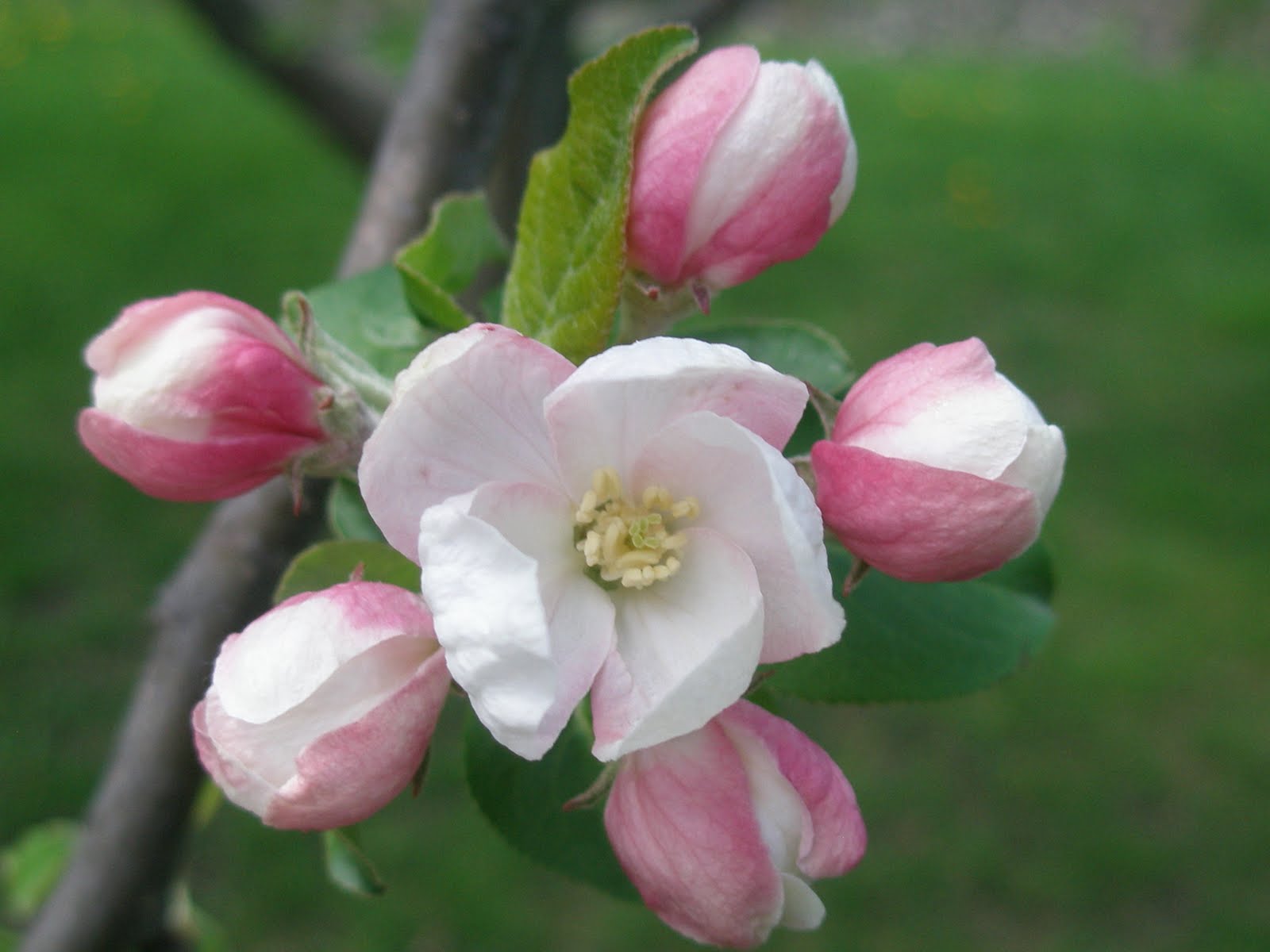
The early varieties have reached Tight Cluster, with the laggers still showing only a green tip. With scab season off to a wet start, the possibility of drier days ahead brings hope. The first plum in in full bloom, setting the stage for a symphony of pink and white which will grace the orchard in the coming weeks.
 |
| The first plum blossoms |


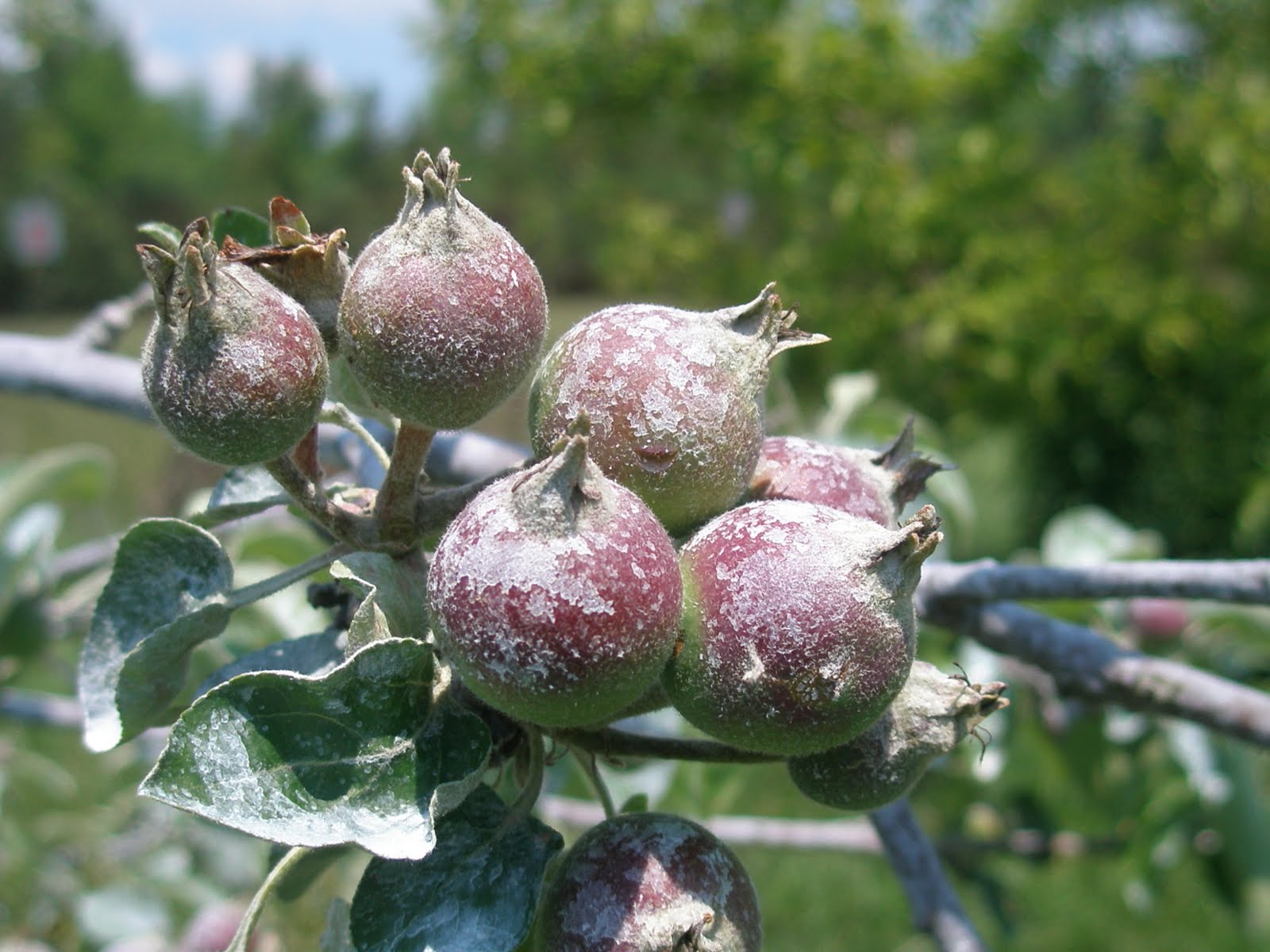






 April brought a cool wet spring that put the trees almost two weeks behind last year (an exceptionally warm spring). April also brought a scramble to purchase the sprays and equipment I would need to make my first foray into organic apple production. A twenty-six gallon sprayer, a 19.5 horsepower used lawn tractor and lots of kaolin clay were among the purchases. Now in these final days of April, I have made my first application of sulfur and piled up most of the branches left strewn around the orchard from winter pruning. After an exceptional burst of April showers that will no doubt bring a plethora of may flowers, the rivers and streams are swollen and the ground saturated. Small ponds and mud abound in the orchard, making walking a messy business and getting around with any type of equipment almost impossible.


